

Anti-PRPS1/2/3
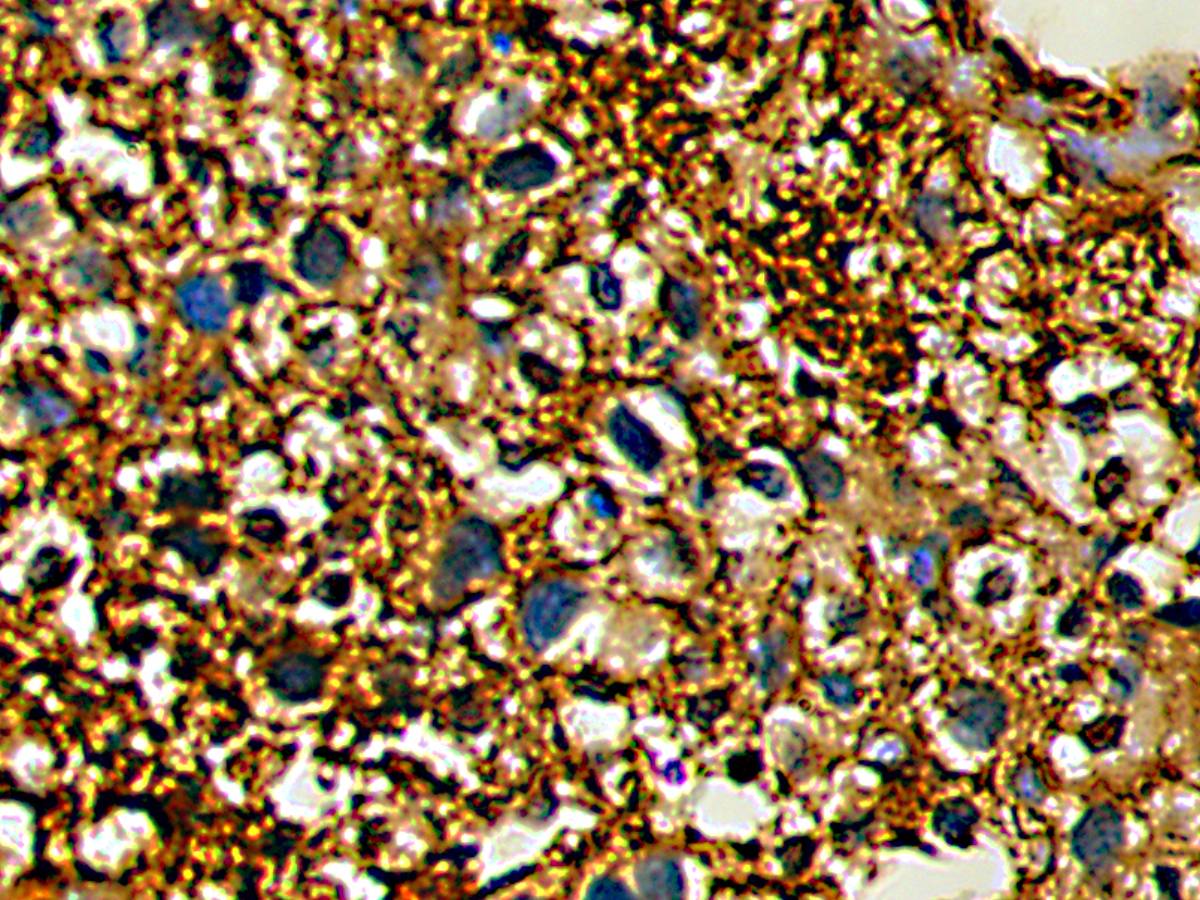
PRPS (phosphoribosyl pyrophosphate synthetase) plays a vital role in catalyzing the phosphoribosylation of ribose 5-phosphate, crucial for purine, pyrimidine, and pyridine biosynthesis in both de novo and salvage pathways. While PRPS1 and PRPS2 are widely expressed, PRPS3 is specific to the testis. Mutations in PRPS1 can lead to PRPS superactivity, characterized by gout and excessive production of purine nucleotides, uric acid, and PRPP. Additionally, PRPS1 mutations may result in reduced activity, contributing to conditions like ARTS syndrome or CMTX5 (Charcot-Marie-Tooth disease X-linked recessive type 5).
| Intended Use | IVD |
|---|---|
| Antibody Type | Monoclonal |
| Clone | A-11 |
| Source | Mouse |
| Tissue Type/Cancer Type | Testis tissue |
| Pack | 1 mL – Manual – Concentrate, 0.5 mL – Manual – Concentrate, 6 mL – Manual – RTU, 50 Tests – Automation – Xmatrx, 50 tests – NanoVIP, 100 Tests – Automation – i6000, 160 Tests – Automation – Xmatrx, 5 slides – Xmatrx, 5 slides – Manual |
Related products
-
Anti-Alpha-Fetoprotein (AFP)
Price range: $269.00 through $1,295.00 Select options This product has multiple variants. The options may be chosen on the product page -

Anti-S-100 Protein
Price range: $240.00 through $766.00 Select options This product has multiple variants. The options may be chosen on the product page -
Anti-Tumor-Associated Glycoprotein (TAG-90 BCA)
Price range: $250.00 through $1,079.00 Select options This product has multiple variants. The options may be chosen on the product page -
Anti-Thyroglobulin
Price range: $250.00 through $935.00 Select options This product has multiple variants. The options may be chosen on the product page